Overview
This project developed a product-detection AI model for a remote kiosk environment. The core challenge was handling limited camera resources, multi-camera distortion, and kiosk-specific viewpoints while still producing useful detection results.
Approach
- Generated synthetic kiosk training data with Blender to compensate for limited real-world data.
- Modeled fisheye distortion and camera-view angles so training data resembled the target deployment environment.
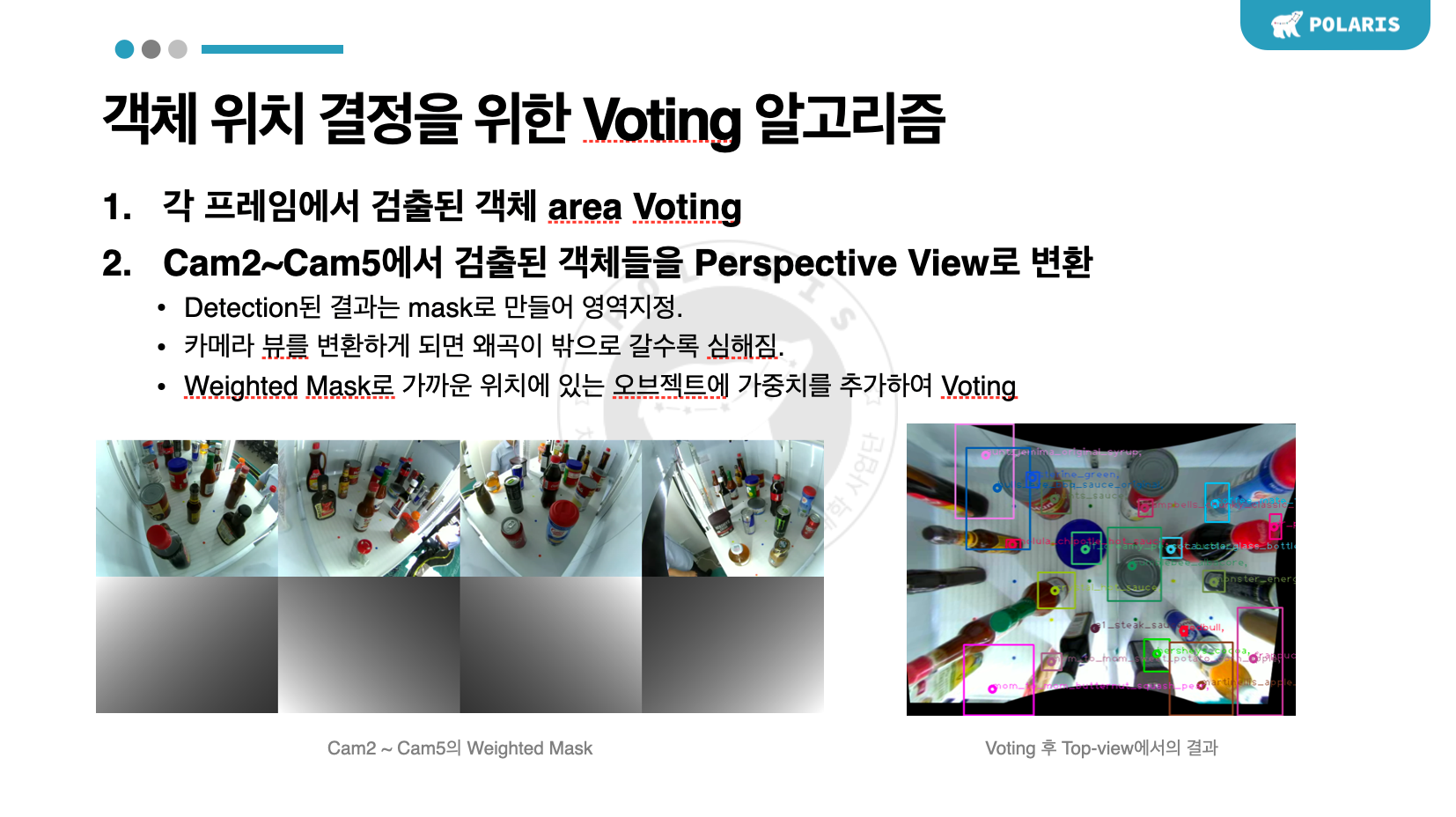
- Explored distorted multi-camera stitching for combining frames from constrained camera positions.
- Used PyTorch and OpenCV for the computer-vision pipeline.
Role
I focused on synthetic-data generation, camera-view transformation, and the object-detection workflow. The work connected 3D scene generation with practical 2D model training for kiosk product recognition.
Result
The project received 3rd place in the 2023 Deep Learning-based Kiosk Product Detection AI Model Development contest at Seoul National University.
Materials
This visual shows the distorted multi-camera stitching experiment used to reason about kiosk camera placement and object-detection viewpoints.