Overview
Burning Detection is a medical-computer-vision pipeline for analyzing burn-wound images. The project combines severity detection, wound-area segmentation, and healing-period prediction into one workflow so clinical image data can be converted into structured assessment signals.
Role
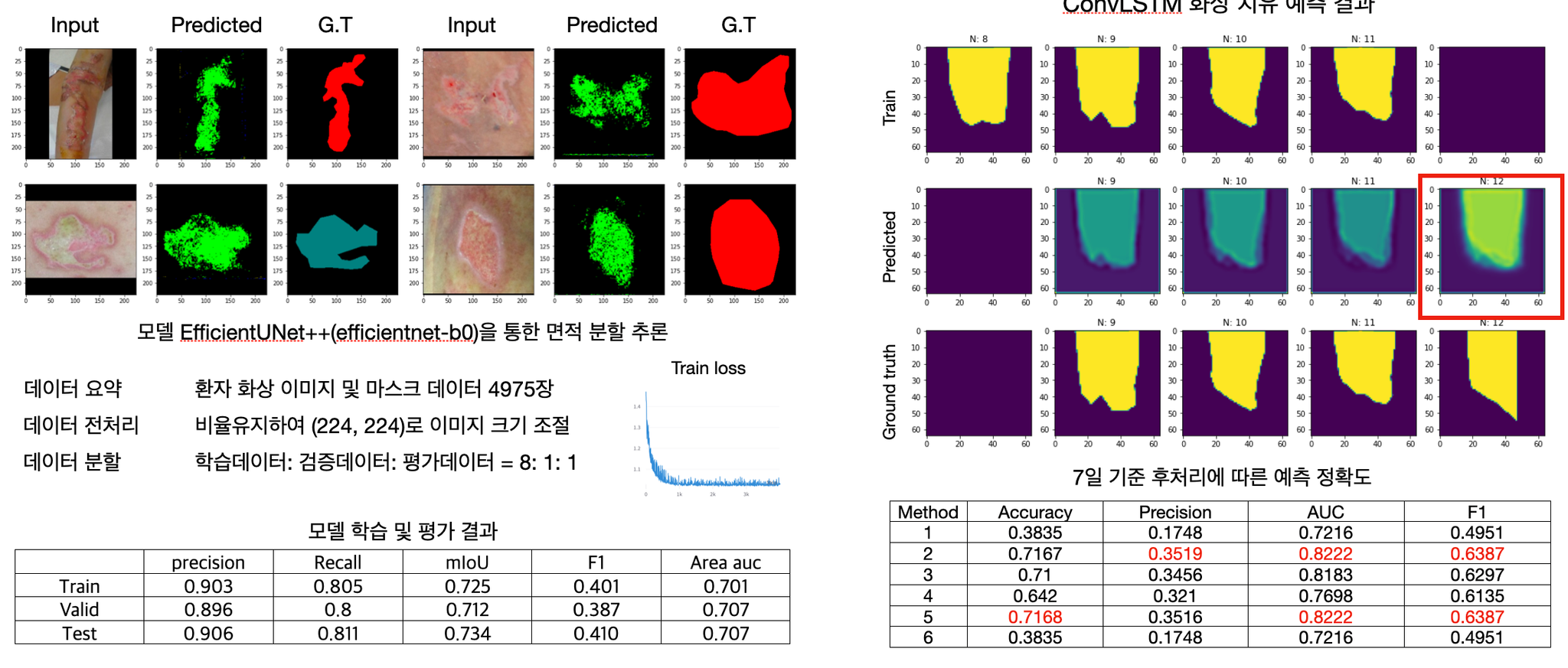
- Compared UNet, UNet++, and EfficientUNet++ variants for burn-area segmentation.
- Applied and evaluated YOLO-based detection for burn severity classification.
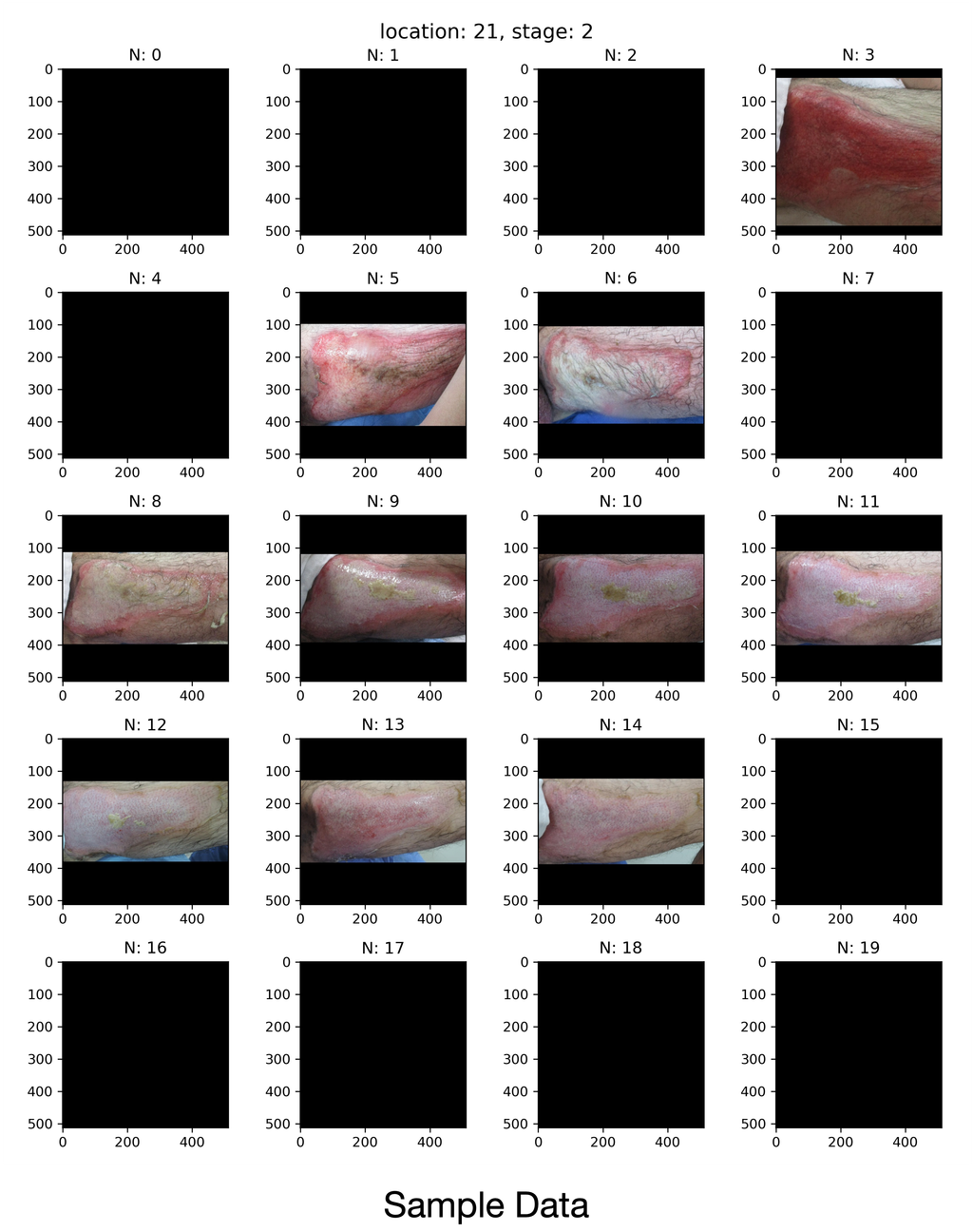
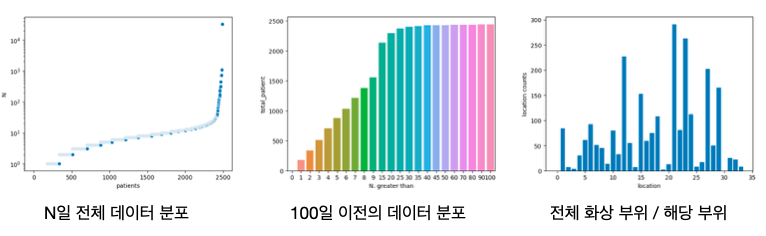
- Performed dataset exploration, preprocessing, and label-quality checks before training.
- Built a ConvLSTM-based prediction stage for estimating wound-area change and expected healing trajectory.
Pipeline
- Detect burn severity from the input wound image.
- Segment the burn region and estimate the wound area.
- Feed detection and area features into a temporal prediction model.
- Return a structured output containing severity, segmentation, and predicted healing progress.
Result
The final prototype established an end-to-end detection, segmentation, and prediction pipeline. The ConvLSTM healing-area prediction reached roughly 0.8 ROC performance in the project evaluation.
The work also used the public AIHub burn-image dataset: AIHub burn data.
Materials
These visuals show the burn-analysis pipeline from input wound imagery to dataset exploration and model inference outputs.